Rongsheng Refractories Group
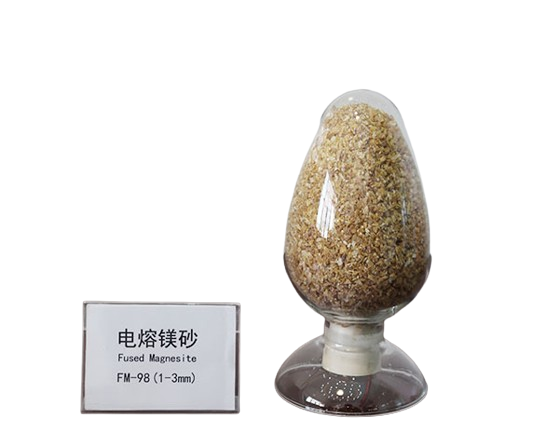
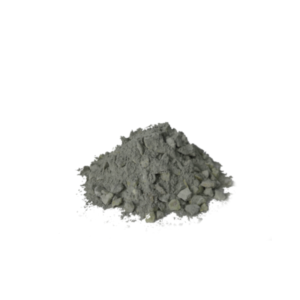
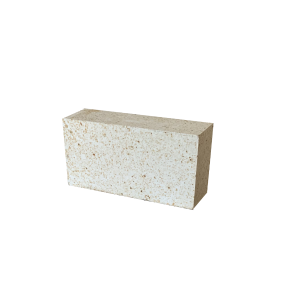
Fused magnesia has the following characteristics, like high purity, large crystal grains, dense structure, high slag resistance and good thermal shock resistance. It is an excellent high temperature electrical insulating material, which is also used to make high quality magnesia bricks, magnesia carbon bricks and shapeless important raw materials for refractory materials. Fused magnesite is widely used in metallurgy, chemical industry, national defense, scientific research, aerospace industry, components of household appliances, etc.
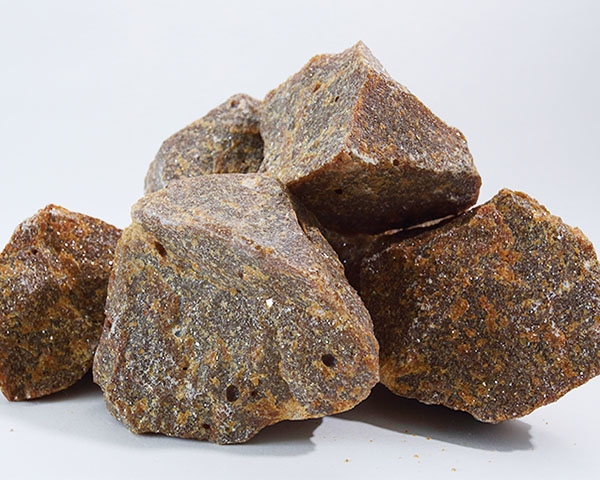
Physical and chemical properties of fused magnesia
Physical and chemical properties of coarse-crystalline fused magnesia (FM)
| Product Code | Chemical Composition (Mass Fraction),% | Particle Bulk Density g/cm’ | |||||
| MgO≥ | SiO2≤ | CaO≤ | Fe2O3≤ | Al2O3≤ | Burn Loss | ||
| LFM 99 | 99.00 | 0.30 | 0.60 | 0.35 | 0.10 | 0.08 | ≥3.51 |
| LFM 98.5 | 98.30 | 0.40 | 0.80 | 0.45 | 0.12 | 0.08 | ≥3.50 |
| LFM 98A | 97.70 | 0.55 | 1.10 | 0.60 | 0.12 | 0.10 | ≥3.50 |
| LFM 98B | 97.50 | 0.60 | 1.20 | 0.65 | 0.15 | 0.12 | ≥3.49 |
| LFM 97A | 96.80 | 1.00 | 2.00 | 0.70 | 0.15 | 0.15 | ≥3.45 |
| LFM 97B | 96.50 | 1.15 | 2.30 | 0.75 | 0.18 | 0.20 | ≥3.42 |
Physical and chemical properties of electroflaked magnesia with high calcium content (FM (C/S=2))
| At the cargo | Chemical composition (mass fraction),% | Bulk density of particles, g/cm3 | |||||
| MgO≥ | SiOz≤ | CaO≤ | Fe2O3≤ | Al2O3≤ | Combustion Loss | ||
| HFM 98 | 97.70 | 0.60 | 1.20 | 0.65 | 0.12 | 0.10 | 3.50 |
| HFM 97 | 96.80 | 0.85 | 1.70 | 0.75 | 0.15 | 0.15 | 3.48 |
| HFM 96 | 96.00 | 1.20 | 2.40 | 0.85 | 0.18 | 0.18 | 3.45 |
Physical and chemical properties of ordinary fused magnesia (FM)
| At the cargo | Chemical composition (mass fraction),% | Bulk density of particles, g/cm3 | |||||
| MgO≥ | SiOz≤ | CaO≤ | Fe2O3≤ | Al2O3≤ | Combustion Loss | ||
| FM 98 | 97.50 | 1.00 | 1.50 | 0.65 | 0.10 | 0.10 | ≥3.50 |
| FM 97 | 96.50 | 1.30 | 2.00 | 0.70 | 0.15 | 0.15 | ≥3.48 |
| FM 96 | 95.50 | 2.50 | 2.30 | 0.80 | 0.18 | 0.18 | ≥3.45 |
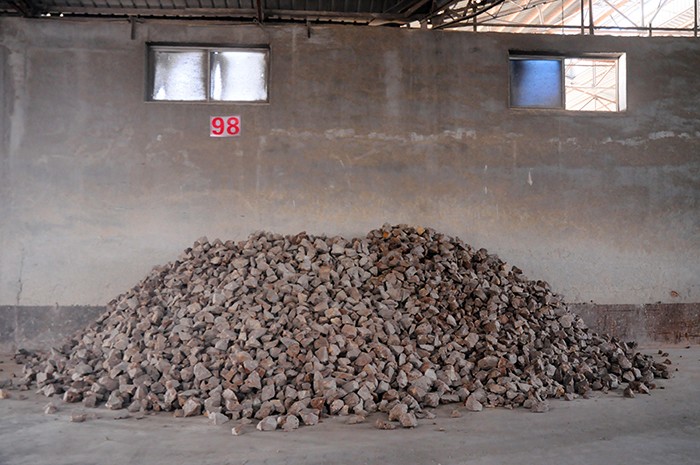
Special process for producing fused magnesite
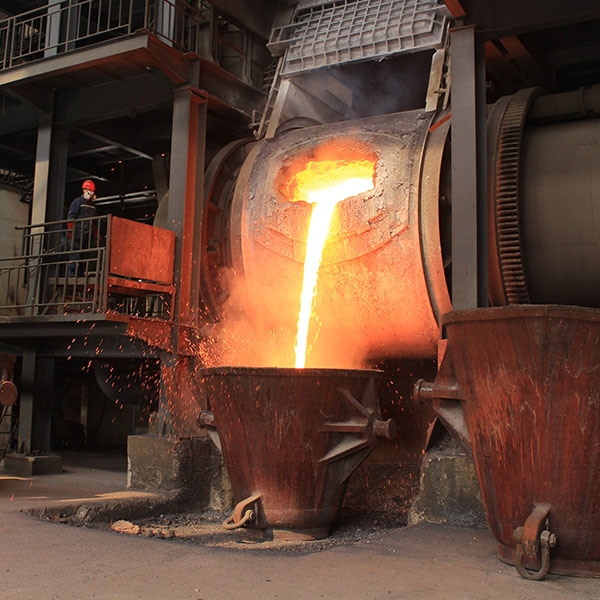
In a specific industrial production, the raw materials for fused magnesia of different technical characteristics also differ. In conventional fused magnesia, magnesite is usually used directly as a raw material, while coarse-crystalline fused magnesia uses easy-to-fire magnesium as a raw material. The equipment uses submerged arc furnaces, mainly using three regenerated or unregenerated graphite. The specific process is as follows: feeding → ignition and lifting of the electrode → gradual feeding → melting (magnesite is sintered and melted due to heat, released by strong current) → natural cooling → crushing, classification and sorting → warehousing.
Advantages of fused magnesia
It has a complete structure, dense structure, high melting point (up to 2800°C), stable chemical properties, high compressive strength, strong insulating properties, resistance to erosion and corrosion. It is an important raw material for metallurgy, production of building materials, light industry, linings of furnaces and bulk materials. It is also an indispensable and important refractory material in steel making, cement, glass, smelting of non-ferrous metals and other industries.
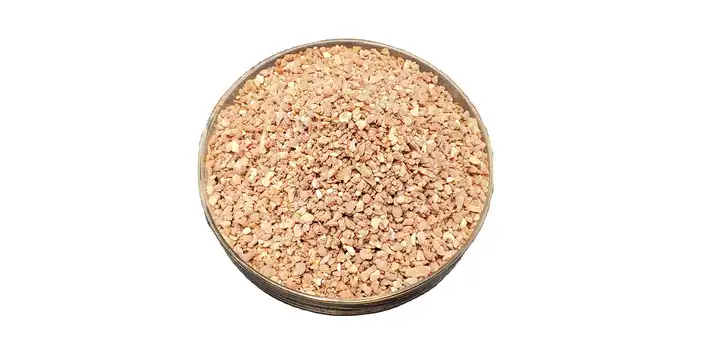
Main applications of fused magnesite
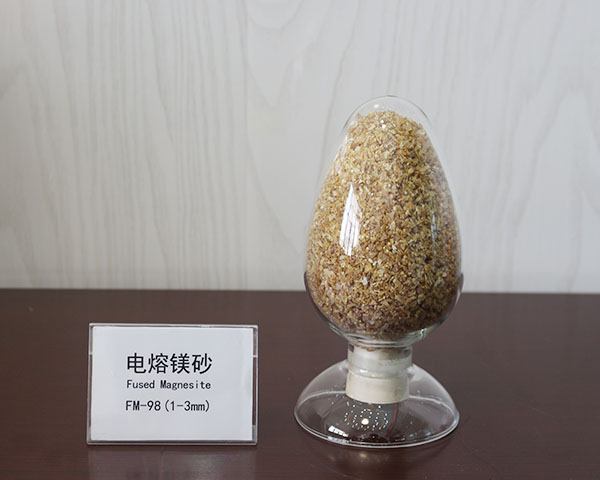
In the metallurgical refractory industry, it is used to produce auxiliary refractory materials, such as high purity fused magnesia, shotcrete materials and tamping materials, as well as special refractory bricks, such as flowing steel bricks, magnesia bricks and magnesia-chrome bricks. It can also be used in vacuum and non-vacuum induction. It is used as a refractory lining for furnaces and electric arc furnaces. It is an ideal raw material for making magnesium oxide crucibles, furnace bubbles and various high temperature shells.