 Rongsheng Refractories Group
Introduction to the design of a rotating stove for the cement industry and refractory products
The rotary kiln is a round cylinder, inclined at a certain angle (3~5°) and lined with fireproof materials. The diameter and length of the rotary kiln depend on the service life of the rotary kiln. The production volume is directly related.

Operating principle of a rotary kiln
The rotary kiln is a round cylinder, inclined at a certain angle (3~5°) and lined with fireproof materials. The diameter and length of the rotary kiln depend on the service life of the rotary kiln. The production volume is directly related.
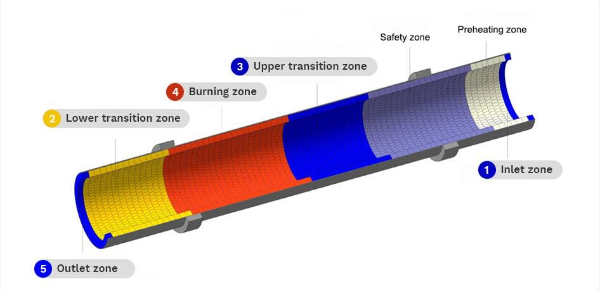
Decomposition zone
In a new cement dry kiln 90% raw materials are decomposed in a pre-decomposition system outside the oven, and the rest 10% are completed in the decomposition zone in a rotary kiln, mainly by decomposition of calcium carbonate.
The temperature of the material in the decomposition zone is 800~1000°C, and the gas temperature – 1000~1400°C. Main environments, encountered by refractory materials in the kiln, are high temperature, chemical erosion, such as lye, sulfur and chlorine, and mechanical impact, caused by rotation of the furnace body. Refractory materials of the decomposition zone must have good mechanical strength and resistance to chemical influences, such as lye.
Materials, which can be used mainly, include spinel bricks, high alumina anti-peel bricks, silicon molybdenum bricks and high alumina bricks.
Upper transition zone
Located behind the decomposition zone, the flue gas temperature in the furnace is approximately 1700°C. Due to fuel combustion, the flue gas temperature changes frequently. The furnace casing in this area sags and falls from time to time.. The lining is in direct contact with flue gases and clinker and is subject to severe thermal stress. Changes frequently and is subject to clinker abrasion, exposure to high temperature flue gases and clinker
Erosion of carbon-alkaline sulfur compounds and cylinder roundness stress in the wheel belt area.
The upper transition zone must withstand high temperatures and erosion of part of the liquid phase of the cement clinker, and must also have good thermal strength.
Refractory bricks usually include molybdenum silicate bricks, magnesia-alumina spinel bricks and special anti-flaking alumina bricks with high aluminum content.
Firing zone
In the highest temperature part of the furnace, the flame temperature can reach 1800~2000℃, and the temperature of the furnace material can reach 1350~1400℃. A large amount of cement clinker is formed. A stable furnace shell must be formed in this part to protect the facing bricks. Besides, a large number of alkalis and sulfur compounds in the furnace materials volatilize, therefore facing bricks must have a suspended kiln shell.
Besides, it can resist thermochemical erosion of melt components and alkali and sulfur compounds in the furnace lining, and must also withstand the effects of thermal shock and oven damage, caused by the destruction of the furnace casing.
Mechanical stress, occurring when the body rotates in the firing zone, big, and the chemical reaction is intense. The refractory material must have good heat resistance, resistance to alkalis and cement clinker erosion. At the same time, the refractory material here must be resistant to kiln firing, to form a protective layer on the surface of the lining. Commonly used molybdenum silicate bricks and periclase-spinel bricks.
lower transition zone
The kiln facing brick in the lower transition zone can withstand the thermal effects of high temperature air and clinker at temperatures above 1400°C and is more able to withstand the effects of high temperature dusty air flow and hardened clinker.
Abrasion, erosion due to clinker melt, melt of sulfur and alkaline compounds and gas, high temperature cylinder deformation and ovality stress in the wheel belt.
The temperature in the lower transition zone is lower, than in the firing zone, and there is no stable protection of the furnace surface. Cement clinker is highly degraded, and the range of temperature fluctuations is large. Hence, The refractory materials in this zone not only have high fire resistance and high load of refractory materials in the firing zone. In addition to softening point and high strength, they must also have good thermal shock resistance and oven hang characteristics. Usually, silicon-molybdenum red bricks and periclase-spinel bricks are used.
Cooling zone
The cooling zone of the new rotary cement dry kiln is similar to the lower transition zone. The cement clinker cools and hardens in this zone and continues to move forward.. It leaves the furnace through the neck and enters the cooling system. In this zone the gas temperature reaches 1400°C, and the temperature fluctuates wildly. Clinker crushing and air flow erosion are also very serious. The refractory material of the cooling zone must be wear-resistant, resistance to alkali corrosion and good resistance to thermal shock. Molybdenum silicate bricks or high alumina bricks are usually used, anti-flaking.
Front and rear necks of the oven
The rear kiln neck is located at the connection between the pre-firing kiln and the rotary kiln system. The temperature in the sub-region is relatively low, but it is susceptible to chemical erosion as a result of grinding cement raw materials, as well as alkali and sulfur compounds, circulating and enriched in the furnace; The front neck of the kiln is located in the rotary kiln. Temperature fluctuates greatly at the unloading site, and the erosion of clinker and air flow is relatively serious, which requires high wear resistance, resistance to thermal shock and resistance to material chipping.
Refractory materials at the front and rear entrances to the furnace must have good wear resistance, resistance to alkalis and chips. Corundum is often used, corundum-mullite, mullite-silicon carbide castings, fireproof castings with high aluminum content, etc..
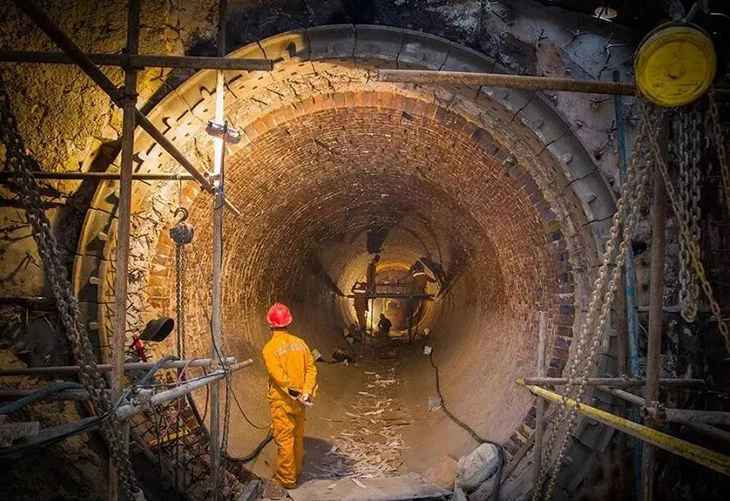
Coal injection pipe
Coal injection pipe – this is a pipe, which directly transports fuel and air to produce heat. The front end of the coal injection pipe is directly affected by the thermal radiation of the high temperature flame, as well as grinding and erosion of cement clinker and air flow. Because modern rotary kilns also process solid waste and household waste together, dangerous compounds, such as lye, sulfur and chlorine, seriously corrode the materials of coal injection pipes. Combined with the effects of heat shock, caused by temperature fluctuations, refractory materials must have good resistance to chemical erosion and thermal shock spallation.
Depending on the material use conditions, corundum-mullite castings are mainly used for coal injection pipes, castings, steel fiber reinforced, castings with low cement content and high aluminum content, etc..
Tertiary duct
Tertiary duct – this is a hot air duct, connecting cooler and pre-firing oven. It is used to transport the waste heat of cement clinker to the pre-kiln for reuse. Tertiary duct operating conditions are harsh, especially in areas of taps and shut-off valves. High temperature air flow carries large amounts of dust and alkali compounds, sulfur and chlorine, which wear out and destroy the material, as a result it becomes loose and flakes off.
Tertiary duct materials mainly consider wear resistance, resistance to alkali erosion and chipping. High-strength alkali-resistant bricks can be used, high-strength alkali-resistant castings, castings with crush protection, etc..
What refractory materials are used in rotary cement kilns??
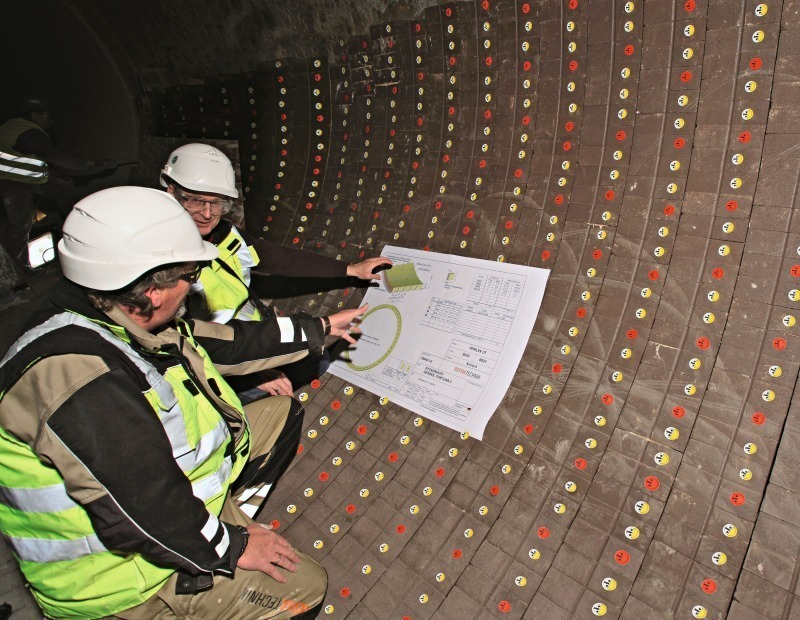
| Rotary Kiln Parts | Refractory materials |
| Decomposition zone | Spinel bricks, high alumina anti-flaking bricks, silicon molybdenum bricks and high alumina bricks, etc.. |
| Upper transition zone | Silicon molybdenum bricks, magnesia-alumina spinel bricks, special anti-flaking bricks with high alumina content, etc.. |
| Firing zone | Spinel bricks, high alumina anti-flaking bricks, silicon molybdenum bricks with high alumina content, etc.. |
| Lower transition zone | Silica Molybdenum Red Brick, periclase-spinel brick, etc.. |
| cooling zone | Silicon molybdenum bricks or high alumina anti-peel bricks etc. |
| Front and rear necks of the oven | Corundum, mullite-silicon castings, etc.. |
| Coal injection pipe | Corundum and mullite castings, castings, steel fiber reinforced, castings with low cement content, etc.. |
| Tertiary duct | High-strength alkali-resistant bricks, high-strength alkali-resistant castings, castings with crush protection, etc.. |