 Rongsheng Refractories Group
The main method for the synthesis of magnesium-aluminum spinel
Magnesium-aluminum spinel (MgAl2O4), also known as spinel, is an important inorganic compound, which usually has a high melting point, excellent heat resistance and mechanical strength. It can be obtained by various synthetic methods, Below are some common ones:
Preparation of magnesium-aluminum spinel

Currently spinel, which can be used as raw materials for refractory materials, must be obtained synthetically. The main synthesis methods are sintering and electrofusion. The raw materials are high purity alumina and chemical grade magnesium oxide.
Preparation of spinel by sintering
The advantage of the sintering method is that, that this process is a continuous process of ceramicization, which allows you to control the feed rate and maintain uniform temperature distribution in the oven. Thus, the resulting products are very homogeneous, with grain size 30-80 µm and porosity. Lower (<3°%).
Preparation of spinel by electrofusion
The electrofusion method is an intermittent workflow. Raw materials must be sorted and homogenized in advance before starting work, because, if the block of raw materials is too large, cooling time needs to be increased. At this time, the microstructure will be uneven during the cooling process, and if the cooling rate is too high, the spinel crystal on the outside will be smaller, than inside, and a large amount of impurities with a low melting point will accumulate in the center.
Characteristics of magnesium-aluminum spinel
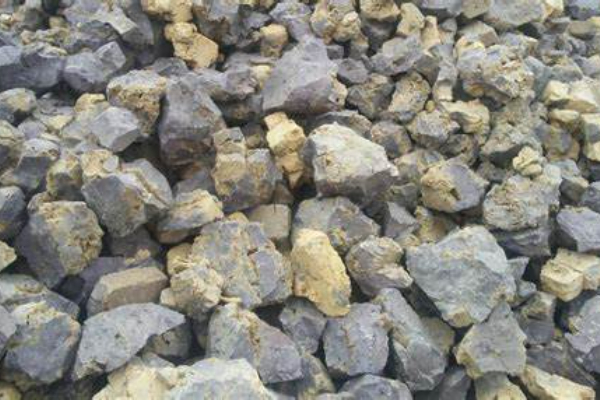
Magnesium-aluminum spinel is highly resistant to slag corrosion, thermal shock, as well as high temperature and compressive strength. High-quality pre-synthesized spinel provides new raw material for the production of high purity amorphous and shaped refractory materials. Therefore, it has been widely used.
Fireproof magnesium aluminum spinel casting
Refractory castings, containing magnesium-aluminum spinel, made from corundum, magnesium, high-alumina bauxite and synthetic fillers and magnesia-aluminum spinel powders. Due to the presence and formation of spinel, expansion and microcracks will occur, thereby softening thermal stress, arising in the material. Thus, It has good resistance to slag erosion and thermal shock. At the same time, the spinel phase can envelop periclase and increase resistance to hydration.