 Rongsheng Refractories Group
Introduction of universal high alumina arc brick
Universal arc bricks are used as lining of steel drums. They are made from clay with a high alumina content. High alumina multipurpose arc bricks are mainly used as steel drum lining. In the past they were mainly made from clay, but now they are gradually being used. Replacing high alumina bricks.
Introduction to Universal Arc Bricks

The arc of the universal arc brick is a semicircle, and the other end is a groove. No matter how thick it is, it can be built into a circle. So-called universal arc, this kind of brick is often used in ladles.
Comparison of High Alumina Multipurpose Arc Bricks and Clay Multipurpose Arc Bricks
Universal arc high alumina refractory bricks are mainly used as steel drum lining. Previously, they were made mainly from clay, but are now gradually being replaced by bricks with a high alumina content. Service life of universal arc bricks with high alumina content in 2 times more, than clay bricks, that is, during the oxidation of an aluminosilicate refractory material with an aluminum content of more than 48%. There are three types of universal arc bricks with high aluminum content: third level, second level and first level. Certainly, the higher the aluminum content, the better the quality. Currently, the share of high-alumina bricks of the second level is increasing.
High alumina multipurpose arc bricks have the following advantages
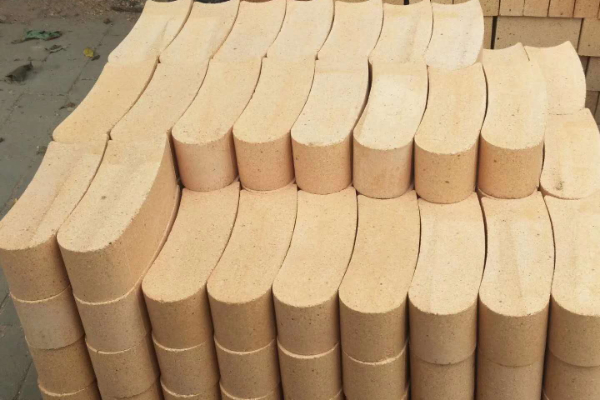
- Low creep rate at high temperatures;
- Excellent peel resistance;
- Size can be customized to any length;
- Resistance to high pressure at normal temperature and wear resistance;
- Good resistance to chemical erosion, especially to acid slag;
- Reduce the thickness of the facing brick and, respectively, increase the capacity of steel drum;
- Vertical seams of universal arc bricks on 70% less, than the vertical seams of standard refractory bricks, which reduces the use of refractory mortar and saves costs on consumables;
- The bending joint can be moved back and forth freely to adjust the roundness when laying bricks, therefore it is convenient to lay refractory bricks, and the thickness of brick joints can usually reach 1 mm.