 Rongsheng Refractories Group
Principles of implementation of blast furnace production of cast iron
The blast furnace is an important metallurgical equipment, used for the production of cast iron. The blast furnace principle converts iron ore into liquid iron and slag through the process of high temperature reduction and smelting, implementing the smelting process from ore into metal.
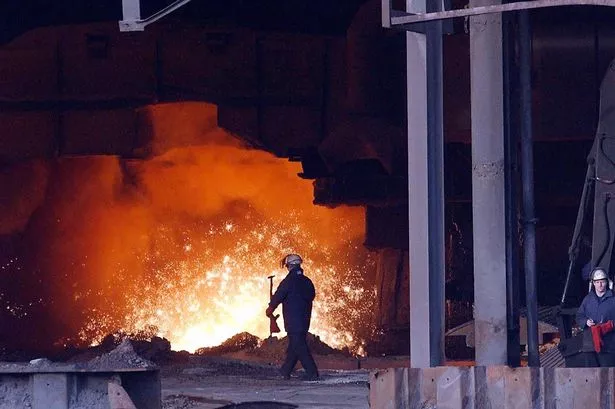
What are the methods for obtaining iron??
Iron production methods mainly include blast furnace method, direct recovery method, reduction smelting method, etc.. The principle is, that reduced cast iron is obtained from ore as a result of physical and chemical reactions in a certain atmosphere (reducing agents CO, H2, C; suitable temperature, etc.). Except for a small part of cast iron, used in casting, most of it is used as raw material for steelmaking. Smelting iron in a blast furnace is the main method of modern iron smelting and an important link in steel production. This method was developed and improved on the basis of ancient iron smelting in shaft furnaces. Cast iron, produced by blast furnaces, is more than 95% of the total world production of cast iron. There are also many requirements for fireproof materials, used in external blast furnaces. Please, contact us for details.
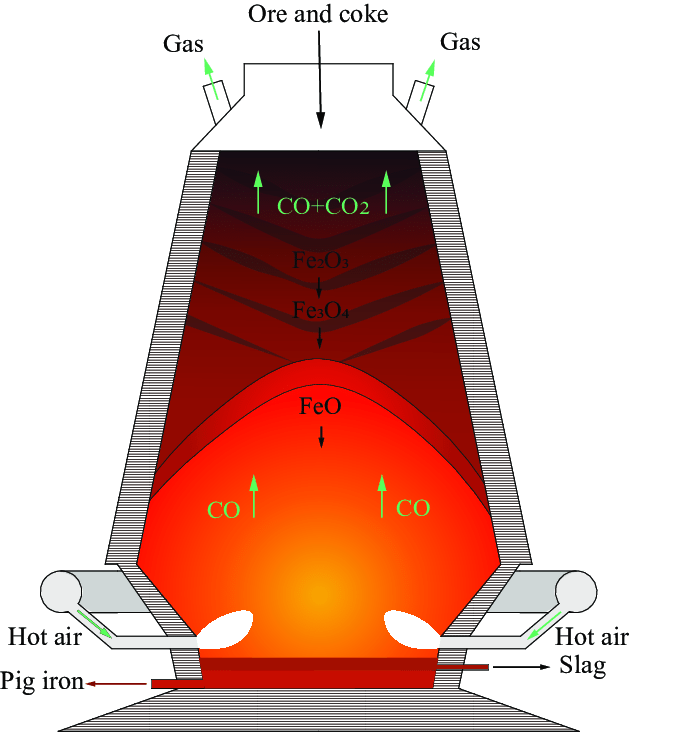
Introduction to the blast furnace iron smelting process
The iron production process involves loading iron-containing raw materials (the sinter, pellets or iron ore), fuel (coke, coal powder, etc.) and other auxiliary raw materials (limestone, dolomite, manganese ore, etc.) from the top of the blast furnace in a certain way. proportion. into the blast furnace, and the hot blast furnace blows hot air into the blast furnace along the tuyere around the furnace, to promote coke combustion (some blast furnaces also inject auxiliary fuels, such as pulverized coal dust, heavy oil, natural gas, etc.).
At high temperatures, the carbon in the coke burns together with oxygen, thrown into the air, with the formation of carbon monoxide and hydrogen. The amount of raw materials and fuel decreases as the smelting process continues in the furnace. When falling charge and rising gas meet, heat transfer occurs sequentially, recovery, smelting and decarburization to produce cast iron.
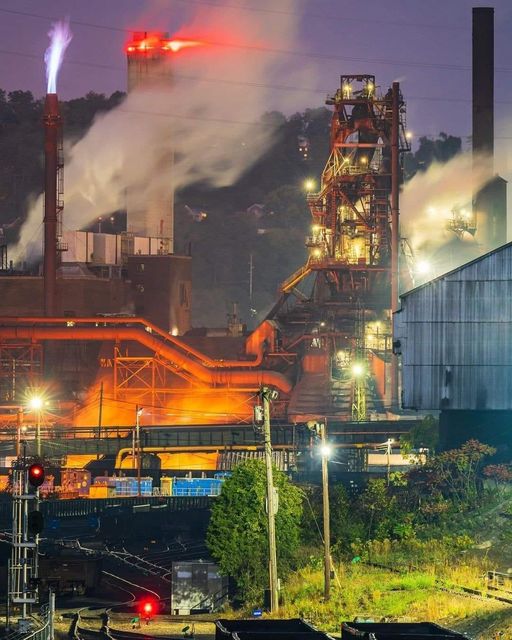
Impurities, contained in iron ore raw materials, connect with flux, added to the oven, forming slag. The molten iron at the bottom of the furnace is periodically drained into a molten iron tank and sent to the steel plant.
Impurities, contained in iron ore raw materials, connect with flux, added to the oven, forming slag. The molten iron at the bottom of the furnace is periodically drained into a molten iron tank and sent to the steel plant.